CITIZEN PLATFORM

CITIZEN PLATFORM

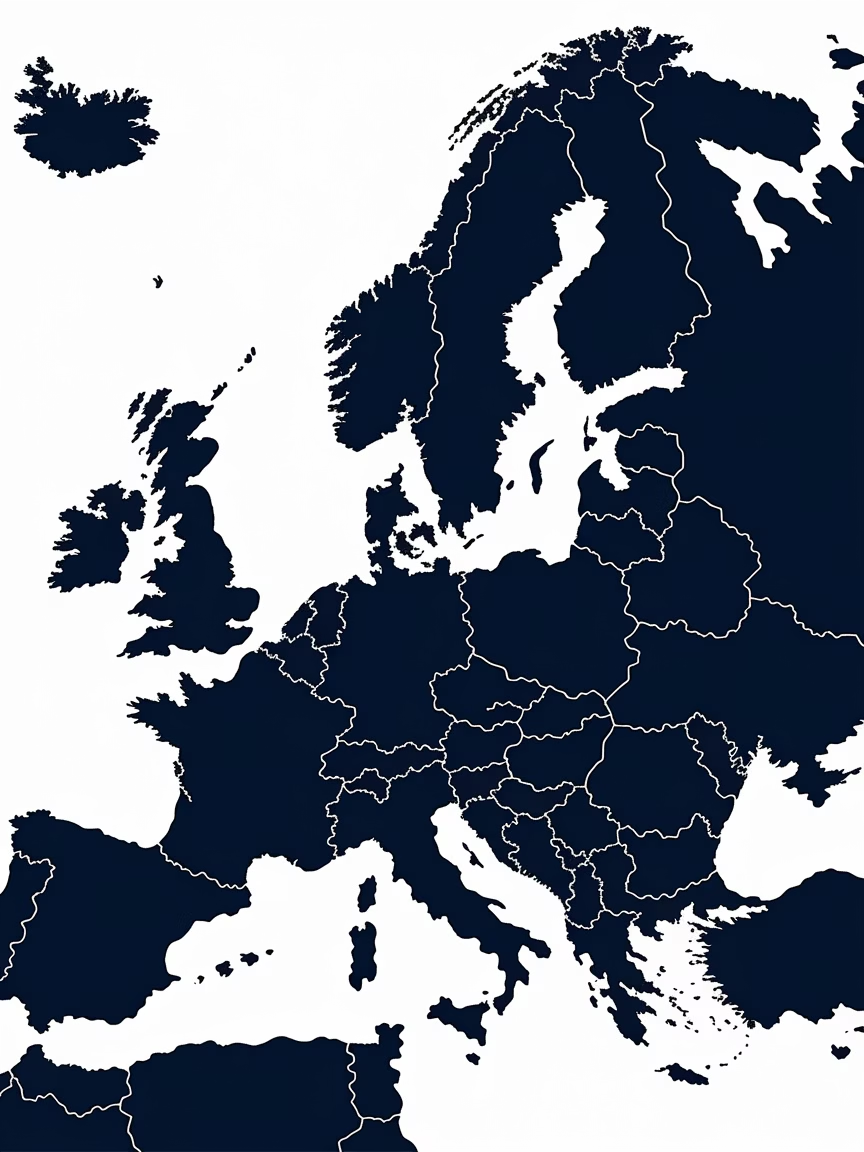
Europe of Citizens and City-States

Europa

Division into City-States

1

Autonomous city-states

autonomy in local decisions under a common European regulatory framework.

2

Functional regions

grouping of city-states according to population, economy and natural resources.

3

Better management

more efficient coordination of sustainable development, infrastructure and resources.

Single Central Government

1
2
3
4

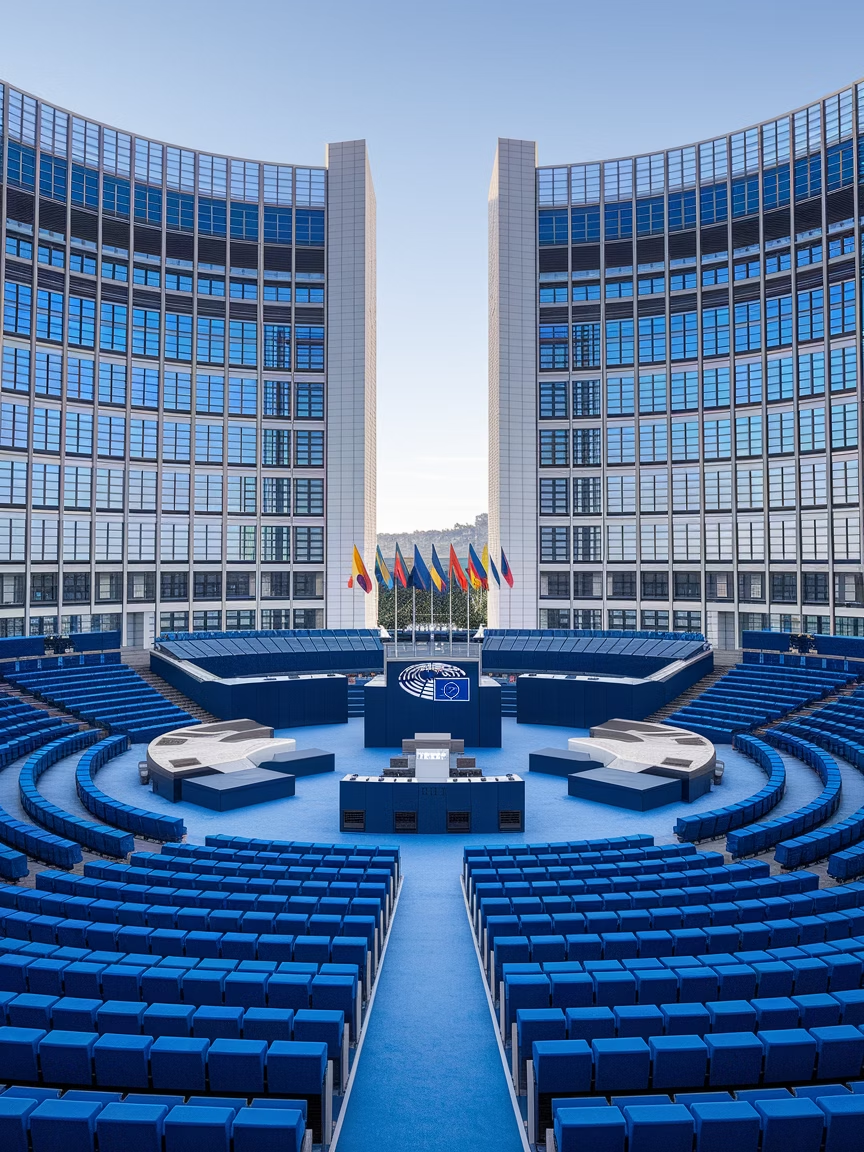
Central European Parliament

Representatives from each city-state

Legislation Areas

Defense, foreign policy, economy, sustainability

Open Lists

Candidates present experience, skills, and projects

Merit-Based Voting

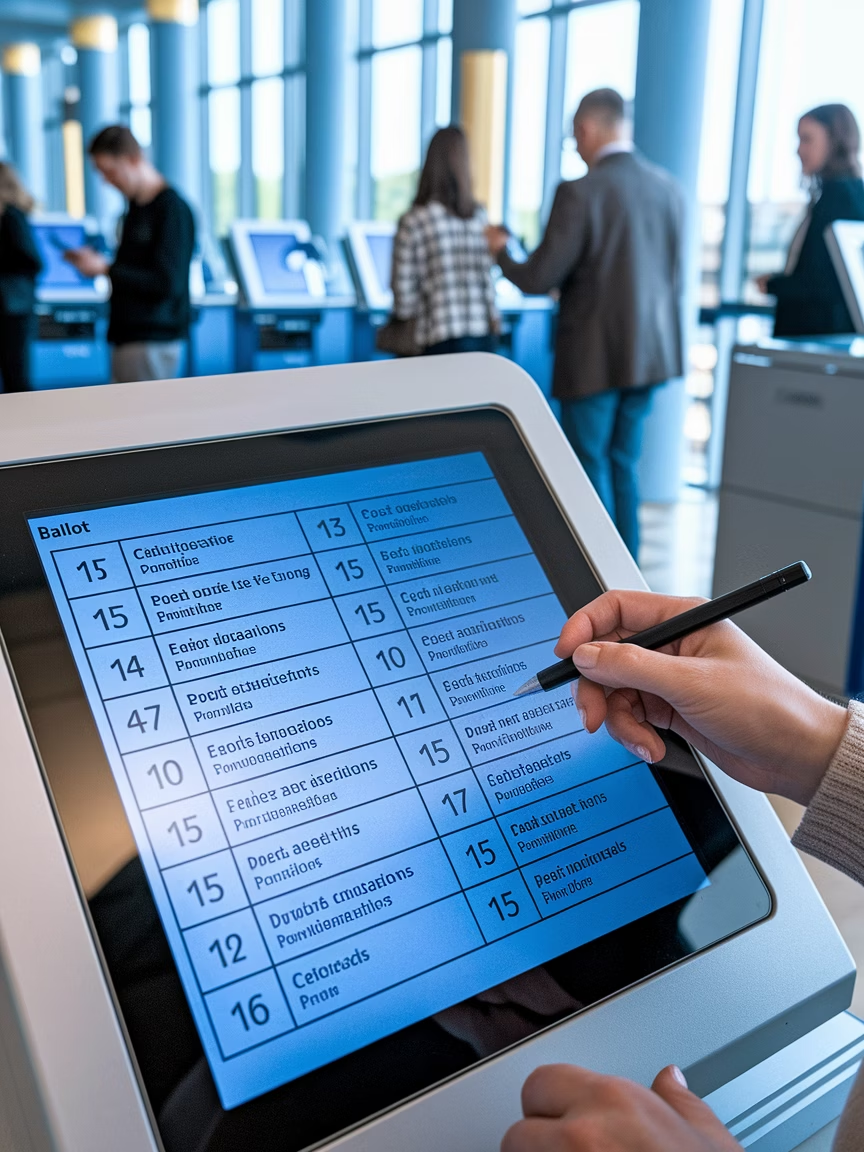
Citizens choose based on skills and projects

Central European Parliament: Composed of representatives from each city-state, the central parliament will legislate in common areas such as defense, foreign policy, economy, and sustainability. Open Lists and Professional Merit: All candidates for positions in the central parliament and local governments of each city-state would present themselves in open lists. Each candidate must clearly demonstrate their experience, skills, and a specific project they intend to promote. Voting by Project and Experience: The citizens of each city-state choose their representatives not only by affiliation, but by evaluating their skills and specific projects (open lists).

Transparency and spending control

1

Public Tribunals

Public Tribunals for Project Review and Public Spending: These tribunals would be composed of experts in economics, sustainability, and law, as well as citizens. Their function would be to audit and review public spending projects transparently, ensuring that funds are used efficiently.

2

Participatory Budgeting

Participatory Budgeting and Citizen Evaluation: For important projects, citizens can access detailed information on the use of public resources and decide in certain cases on priority projects in each city-state.

3

Real-Time Reporting

Publication of Reports and Audits in Real-Time: Financial reports, expenditures, and project progress would be published continuously and accessibly for all citizens.

Transparency and spending control
Single Army and Common Security

Single Army and Common Security

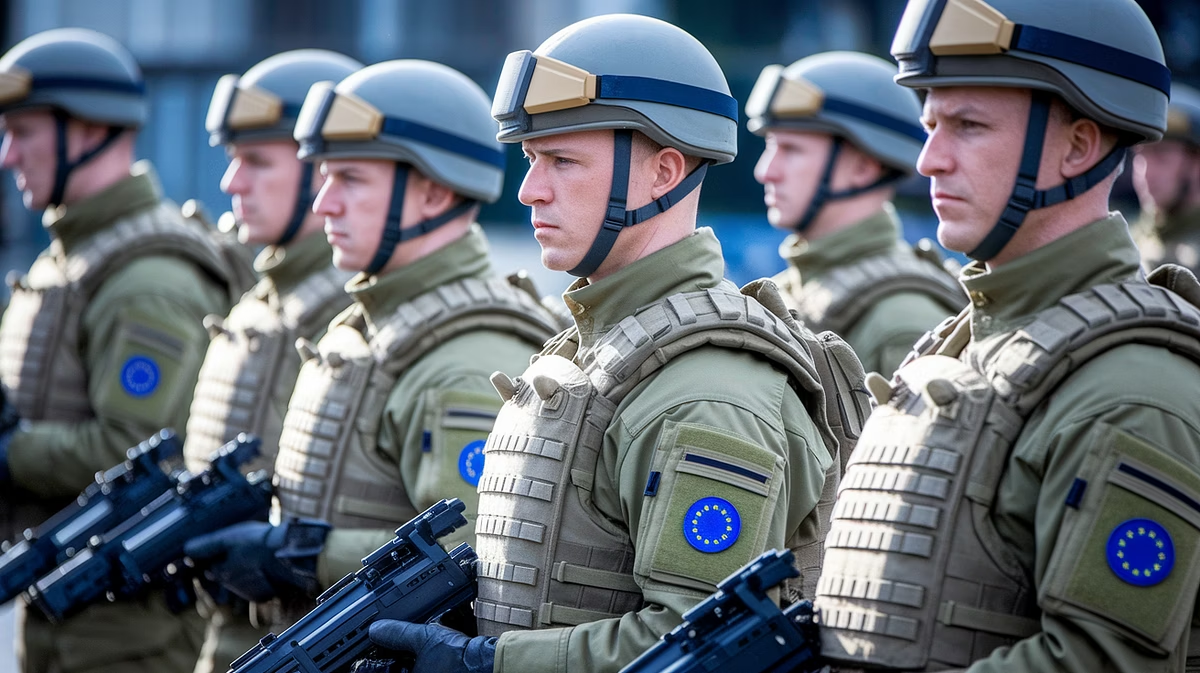
European Armed Forces

European Armed Forces: The armies of each city-state are unified into a single European army, which would reduce costs and increase operational efficiency.

Defense and Peace Policy

Defense and Peace Policy: Europe will adopt a common defense strategy, avoiding duplications in military investment and promoting peace and international cooperation.

Local Security Forces

Local Security Forces: Each city-state would maintain its own security forces, but collaborate under a common framework of shared laws and practices with other security forces available to the EU.

Commitment to Zero Carbon and Sustainability

Commitment to Zero Carbon and Sustainability

Sustainable Planning and Transportation

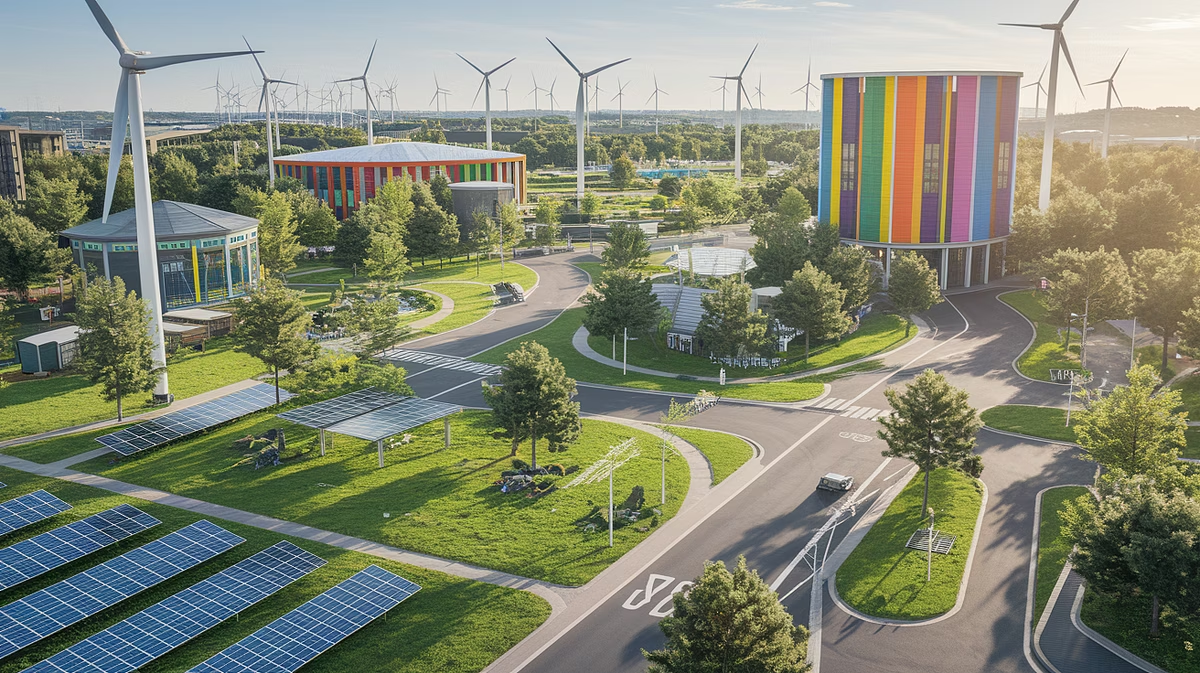
Each city-state will adopt a sustainable urban development model, with electric public transport, renewable energy networks, and pedestrian and bicycle infrastructure.

Zero Emissions Center

Strict zero-emission targets would be set for all city-states and the central government, with incentives and sanctions to ensure compliance.

Regional Clean Energy Projects

Functional regions will collaborate on shared renewable energy projects such as solar, wind, and geothermal, with interconnected energy infrastructure.

Circular Economy and Zero Waste Initiatives

Advanced recycling and circular economy policies would be implemented at all levels to minimize waste and promote the efficient use of resources.

General Organization of the Government System

Citizen Committees

Project evaluation and policy prioritization

Single 5-Year Presidency

Elected leadership for central government

Regional Councils

Coordination between central government and city-states

Single 5-Year Presidency: The presidency of the central government would be elected every 5 years. Regional Councils for Local Coordination: Each functional region would have a council that coordinates specific issues and functions as a liaison between the central government and the city-states. Citizen Committees for Project Evaluation: Citizen committees would be created to evaluate and advise on the prioritization of projects and policies. This would foster active citizen participation in decision-making.

Education and Citizen Participation

Education for Global Citizenship

The education systems of each city-state would include education focused on sustainability, human rights, and global citizenship, strengthening European identity.

Participation Platforms and Citizen Consultations

The central government and each city-state would maintain online platforms where citizens can participate in consultations and important decisions, promoting transparency and participation.

This organizational model for Europe will maintain the local identity and autonomy of each city-state, while ensuring efficient, transparent, and sustainable-oriented centralized governance.

Mobile Application for Citizen Participation

Citizen Audit App

Citizen Audit App

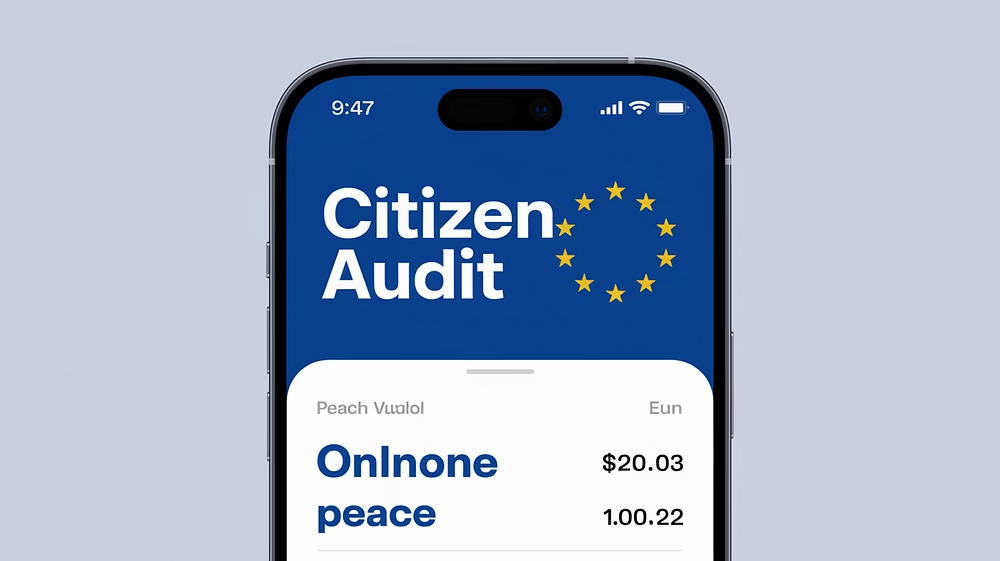
An accessible mobile application for citizens to follow Tribunal reports, review audited spending details, and provide information on potential irregularities.

Irregularity Reports

Irregularity Reports

The app would allow citizens to anonymously report irregularities in public spending, sending information, photos, or videos that would be analyzed by the Tribunal.

Real-Time Notifications

Real-Time Notifications

Citizens could receive notifications about the most important findings and Tribunal decisions, keeping the population informed and engaged.

EU Institutions

EU Central Government

1

Single Presidency

The presidency is elected every five years.

2

Cabinet of Ministers

Each minister leads a specific area and must demonstrate a minimum of 10 years of experience.

3

Parliament of Representatives of City-States (PRCE)

Composed of representatives elected by each city-state.

Electoral System

Electoral System and Candidacies

1

Open Lists

Citizens can vote for specific candidates, not just parties.

2

Experience Requirements

Candidates for ministerial positions must present evidence of their experience.

3

Project-Based Voting

Candidates must present specific projects they intend to implement.

Key Areas of Government and Policies

Economy and Finances

Economic policy and financial regulation.

Health

Healthcare systems and public health initiatives.

Education and Culture

Educational standards and cultural development.

Environment and Energy

Environmental protection and energy policy.

Security and Justice

Internal security and judicial systems.

Technology and Innovation

Research and technological development.

Programmatic success

Definition

"Programmatic success is defined as the complete fulfillment of the government program presented during the electoral campaign." This model aims to strengthen citizen trust and ensure the execution of promised commitments.

Incentive

To recognize and motivate 100% program fulfillment, a 5% incentive of the total executed capital is proposed. This incentive will be granted upon completion of the term, following an audit and verification of fulfillment.

Benefits

"Increases transparency and accountability." "Strengthens trust between citizens and their representatives." "Ensures the achievement of stated objectives." "Promotes efficient and responsible public management."

Citizens Support

Required Support for Citizens' Initiatives

1M+
Citizen Signatures
Minimum required signatures
7
Member States
Minimum countries represented
25%
Of EU Countries
Proportion of Member States

For a citizens' initiative to be considered by the Commission, it must be supported by at least one million EU citizens, from at least a quarter of the Member States (currently, at least 7 of the 27 countries).

Model benefits

More responsive and closer local governance.

Efficient allocation of resources and cooperation between city-states.

Reinforced sustainable development.

Greater citizen participation and control in decisions.

Popular Questions: A Europe of Citizens and City States

Are you in agreement with a Europe of citizens and city states?
This question gauges support for the fundamental restructuring of Europe into city-states rather than countries.
Are you in agreement with having one unique government in Europe for five years with elections with open lists?
This addresses the proposed centralized government model with merit-based candidate selection.
Are you in agreement with citizen control of the state budget and spending through popular control tribunals elected at random?
This explores support for the transparency and control mechanisms proposed for public spending.
Popular Questions: A Europe of Citizens and City States